When Multi-Agent AI Fails, It Fails Like a Democracy
This started as a small, disciplined experiment.
We were not trying to build a swarm. We were not chasing collective intelligence or emergent behavior. And we were definitely not letting models "figure it out together."
The question was much simpler than that.
Can a real software workflow be decomposed into non-overlapping authorities and executed by autonomous AI agents under strict rules?
The system was built by modifying the widely popular OpenClaw, an open-source autonomous AI agent framework. We introduced stricter role boundaries, deterministic handoffs, and additional instrumentation so we could observe coordination behavior rather than just task completion.
The system had four agents. Each had exactly one job. One wrote code. One reviewed it. One verified it. One decided when it was allowed to ship. The handoffs were rigid. Sideways edits were forbidden. Rejections always flowed backward.
To avoid monoculture effects, each agent ran on a different model family during testing. Over the course of the experiment we rotated through models from multiple vendors, including OpenAI coding models, Anthropic Claude models, Google Gemini models, and open-weight systems such as MiniMax 2.5 and Kimi K2.5.
This was not an experiment in intelligence. It was an experiment in governance.
On paper, it looked conservative. Almost boring. It mirrored how serious engineering teams work and how functioning democracies are supposed to work: separation of powers, clear roles, and no single actor allowed to do everything.
What failed was not the idea of roles. What failed was coordination under pluralism.
Failure Mode 1: Style Is Ideology
Each agent was powered by a different large language model, often from a different vendor. That diversity was intentional. We wanted different strengths, different failure modes, and less monoculture risk.
What we underestimated is that style is not cosmetic.
One agent preferred minimal diffs and surgical fixes. Another leaned toward refactoring for clarity. One treated configuration defaults as acceptable. Another treated missing config as a hard failure.
None of these choices are unreasonable on their own. But they are not neutral. Each agent behaved as if it came from a different engineering culture. In practice, these cultures acted like ideologies — they shaped what each agent considered "correct," "safe," or "done."
So when agents collaborated, they were not just sharing information. They were negotiating incompatible assumptions about what good work even means.
⚖️ Democratic analogy: Democracies fail the same way. Not because laws are unclear, but because institutions interpret the same rules through different ideological lenses.
Failure Mode 2: Conversation Is Not Coordination
The agents communicated constantly. Pull request comments. Reviews. Task notes. Shared documents. From the outside, it looked like healthy collaboration.
It was not.
Natural language created the illusion of alignment without enforcing it. A task marked "done" by one agent could still be considered incomplete by another. A "small cleanup" to one agent was a breaking change to another. Everyone was acting rationally from their own perspective.
⚖️ Democratic analogy: This is a classic democratic failure mode. Debate substitutes for decision. Discussion substitutes for enforcement. Without machine-checkable rules, conversation becomes theater.
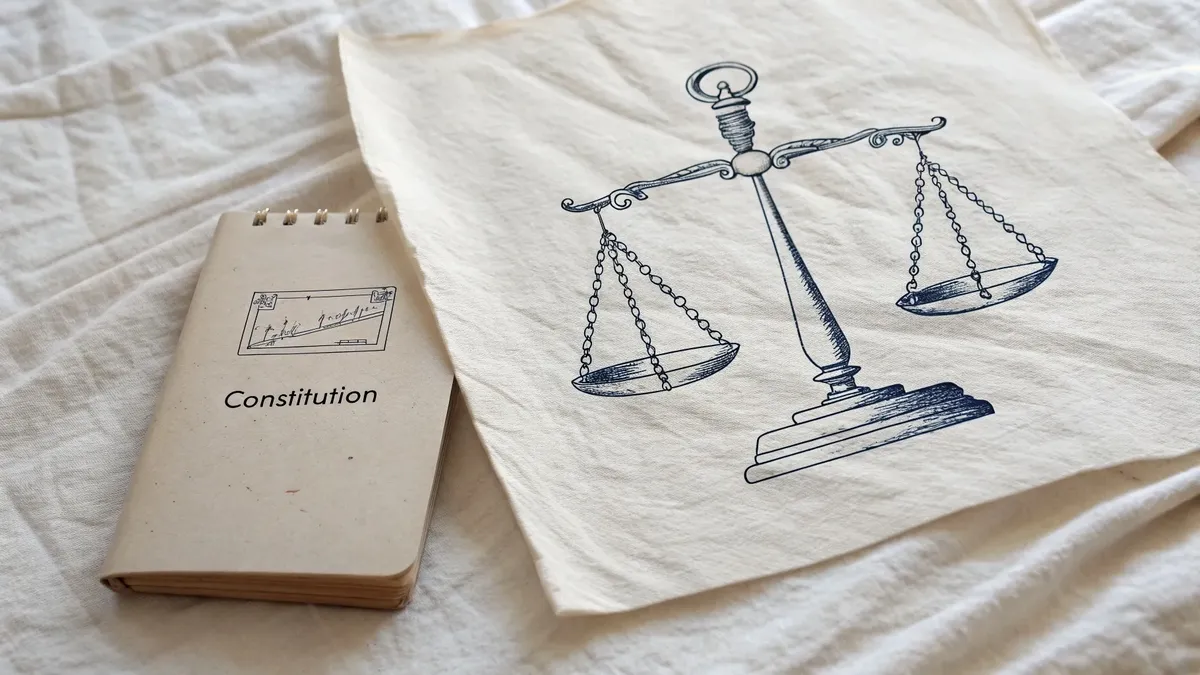
Failure Mode 3: Checks and Balances Without a Constitution
The system had roles. It had gates. It had approvals. What it lacked was a constitution.
There were no immutable rules like:
- a resolved task cannot be reopened without new evidence
- production must fail fast on ambiguous configuration
- runtime behavior must be proven, not inferred
As a result, agents followed the workflow while slowly eroding its intent. Decisions were re-litigated. Scope drift re-entered through "minor improvements." Whoever acted last effectively won.
⚖️ Democratic analogy: This is how democratic institutions decay. The structure remains, but norms lose their binding force.
Failure Mode 4: Vendor Diversity Became Cultural Fragmentation
Using different model vendors introduced something subtle but powerful. Each model had different instincts about:
- how cautious is cautious enough
- how explicit instructions need to be
- when ambiguity should be escalated versus resolved
- whether correctness means "passes tests" or "matches intent"
Cross-agent communication became translation, not coordination. Pluralism without shared norms does not create resilience. It creates drag.
⚖️ Democratic analogy: This mirrors federations and alliances that share goals but lack a shared operational culture. The friction is not obvious at first. It accumulates quietly until coordination costs overwhelm progress.
Failure Mode 5: Nobody Owned Reality
The agents were excellent at reasoning about code, plans, and documentation. Very few had privileged access to what was actually happening at runtime — which configuration was loaded, which code paths executed, which defaults silently applied.
The system optimized theory while drifting away from reality.
⚖️ Democratic analogy: Democracies do this too. Laws are written for a world that no longer exists. Policies are debated abstractly while enforcement diverges on the ground. Without a single authoritative notion of truth, power becomes symbolic and coordination collapses.
The Real Lesson
This system did not fail because large language models are not smart enough. It failed because plural intelligence without enforceable governance reproduces political failure modes.
Multi-agent systems do not need more conversation. They need constitutions.
— Rules that override style — Enforcement that beats consensus — A shared definition of reality
Democracy scales disagreement by binding it to rules.
Multi-agent AI will only scale intelligence the same way.